
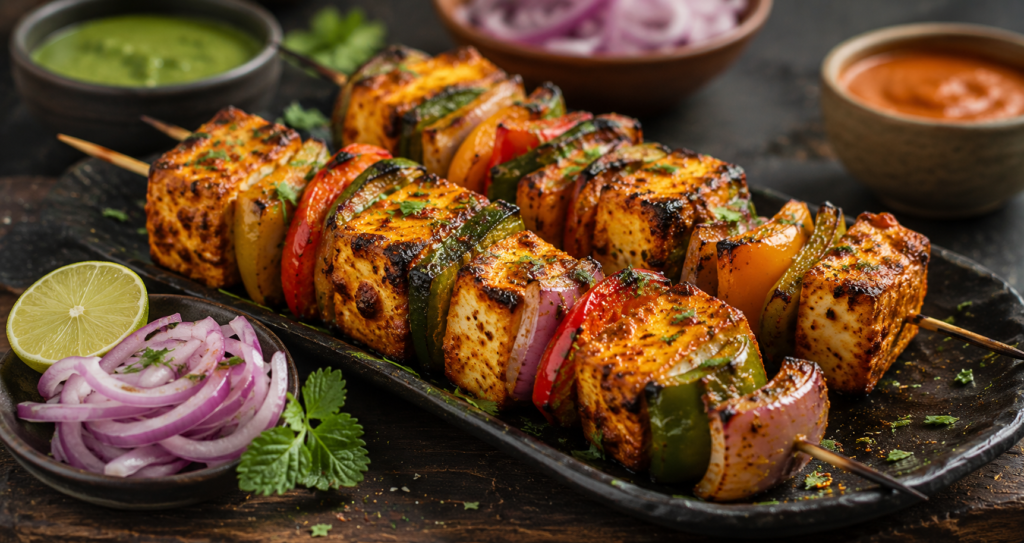
Bamboo vs Metal Skewers — every Indian home griller eventually faces this same moment. You’re standing in a kitchen store — or scrolling through an online listing — looking at two options side by side. On one side, a pack of bamboo skewers: natural, inexpensive, disposable, looks exactly like what the dhaba down the road uses. On the other, a set of flat stainless steel skewers: reusable, sturdy, the kind a serious home cook might own.
The question feels simple. It isn’t.
The right answer depends entirely on what you’re cooking, where you’re cooking it, how often you grill, and what you value most in your kitchen experience. A bamboo skewer and a metal skewer don’t just look different — they behave differently on heat, they hold food differently, they suit different dishes, and they require different care. Getting this wrong means burnt skewer ends, food sliding around, uneven cooking, or a washing-up situation that ruins the post-BBQ mood.
This guide gives you the complete picture — so the next time you’re standing in that kitchen store moment, you already know the answer.
How Indians Actually Grill at Home
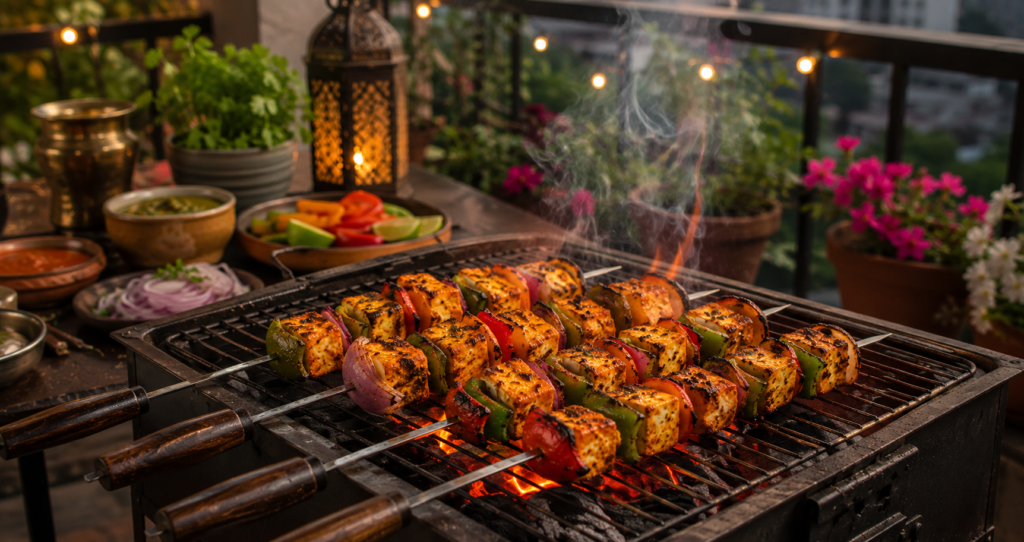
Before comparing skewers, it’s worth understanding the Indian home grilling context — because it’s different from how grilling is typically discussed in international cooking content, which tends to assume a gas or charcoal BBQ grill in a backyard.
Most Indian home grillers work across three main setups:
The gas stove with a grill pan or tawa. The most common setup in Indian city apartments. Skewers rest across the pan or directly over the flame. Quick, accessible, no outdoor space needed.
The oven or OTG. Increasingly common in Indian households, particularly for baking families. Skewers are placed across a baking tray or directly on the oven rack and grilled at high temperatures.
The balcony or terrace charcoal grill. More common in independent houses and larger apartments, particularly for weekend BBQs and festival cooking. Closer to the traditional grilling experience — open flame, smoke, the full ritual.
The electric grill or air fryer. Growing rapidly in use in Indian urban kitchens for its convenience and smokeless operation.
Each of these setups interacts differently with bamboo and metal skewers. What works perfectly on a charcoal grill may be less ideal in an OTG. The comparison below accounts for these real Indian kitchen contexts
Bamboo Skewers: Everything You Need to Know
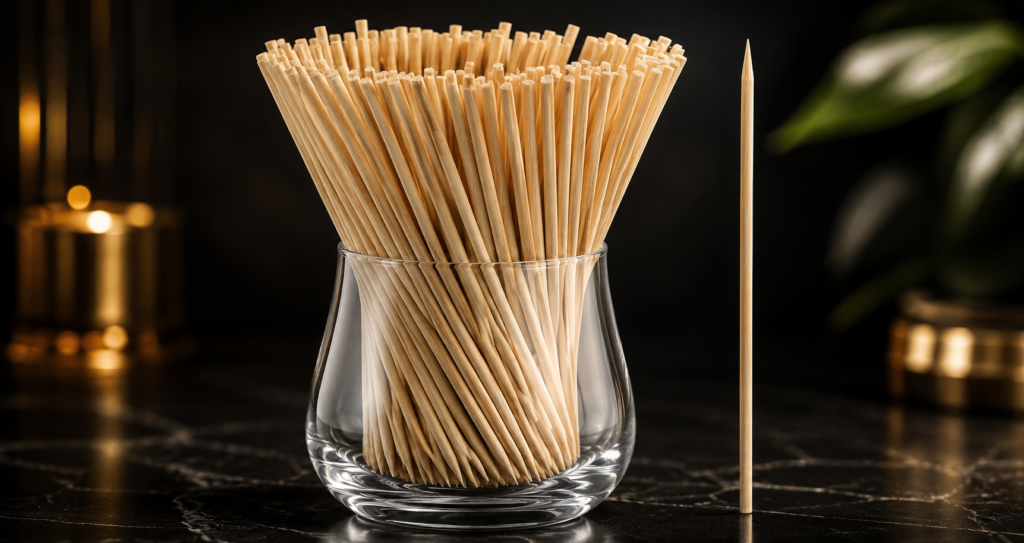
Bamboo skewers are made from thin strips of bamboo — a grass, technically, rather than wood — that are dried, smoothed, and sharpened to a point at one or both ends. They come in packs of 50 to 200, in lengths ranging from 15 cm to 30 cm, and cost very little per piece.
What bamboo skewers do well:
They are light and sharp, which makes threading soft and delicate ingredients — paneer cubes, cherry tomatoes, mushrooms, fish chunks, and soft marinated chicken — significantly easier than with the thicker, heavier profile of metal skewers. The pointed tip pierces ingredients cleanly without compressing or tearing them.
They are naturally non-reactive, which matters for acidic marinades. Curd-based tikka marinades, lemon-heavy kebab mixes, and vinegar-containing preparations don’t react with bamboo the way they can with certain lower-quality metals. The flavour of the food is not affected by the skewer material at all.
They are disposable, which means post-grilling cleanup is a non-event. Use, discard, done. For large gatherings — a Diwali BBQ, a house party, a family weekend — this is a significant practical advantage. No washing, no rusting, no reassembling sets.
They work well in OTGs and ovens because they don’t conduct heat along their length the way metal does. You can pick up a bamboo skewer from one end while the other end is in the oven without burning your hand. This makes turning and checking easier.
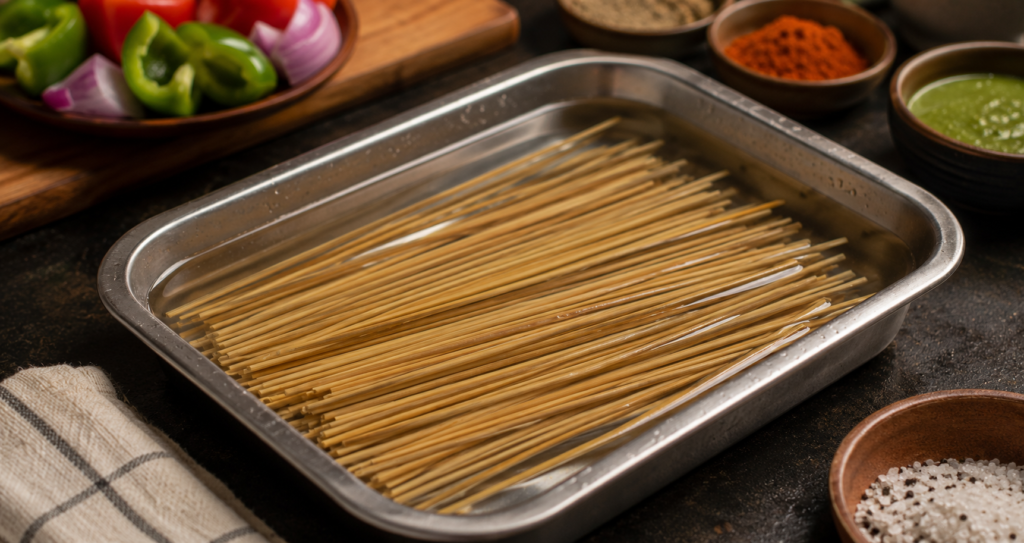
The essential soaking rule: Bamboo skewers must be soaked in water for a minimum of 30 minutes before use over direct flame or on a charcoal grill. This prevents the exposed ends — and sometimes the body of the skewer — from scorching or catching fire. Some cooks soak for up to an hour for longer cooking sessions. On a charcoal grill where heat is most intense, even soaked bamboo can char at the tips — this is normal and doesn’t affect the food, but worth knowing for first-timers.
Where bamboo skewers fall short:
They are single-use, which means ongoing cost and ongoing waste, even if bamboo decomposes much faster than plastic. For regular grillers, the per-use cost adds up. For households conscious about kitchen waste, single-use items create friction even when they’re biodegradable.
They have limited strength for heavy items. Dense chunks of mutton, thick fish steaks, large onion wedges, or heavily packed seekh kebab can cause thinner bamboo skewers to flex, bend, or break during turning. Flat bamboo skewers (wider, more like a paddle) handle heavier loads better than round ones, but metal still outperforms both for very heavy applications.
They don’t work well in high-fat, high-heat charcoal situations where grease drips cause flare-ups. In these conditions, the bamboo can ignite even if pre-soaked. For tandoor-adjacent charcoal cooking with fatty meats, metal skewers are the safer choice.
Metal Skewers: Everything You Need to Know
Metal skewers used in Indian home kitchens are almost exclusively stainless steel — round or flat, 30 cm to 45 cm long, with a ring or handle at one end for safe removal from heat. Flat skewers have a slight edge over round ones for Indian dishes because the flat blade grips minced meat preparations — seekh kebab, shami-adjacent recipes — far better than round skewers, which allow the mixture to spin freely when you try to turn them.
What metal skewers do well:
They are reusable indefinitely. Buy a set of six or eight quality stainless steel skewers once and you have them for years. The cost per use drops to almost nothing over time. For regular home grillers who make tikka and kebabs twice a month through the winter, the economics of metal skewers are clearly superior to bamboo over a twelve-month period.
They conduct heat into the food from the inside. This is one of the most significant functional differences. A metal skewer heats up quickly on a grill and conducts that heat into the centre of whatever is threaded on it — cooking the food from within simultaneously with the external heat. This produces faster, more even cooking, particularly for thicker cuts of chicken, mutton kebabs, and dense vegetables like potato and capsicum. It’s one of the reasons restaurant tandoor cooking achieves that simultaneously charred exterior and fully cooked interior.
They are essential for seekh kebab and minced preparations. Round bamboo skewers cannot reliably hold a minced meat mixture like seekh kebab — the mix slides, rotates, and eventually falls off during turning. Flat metal skewers, inserted into a cylindrical seekh mixture and pressed firmly, grip the meat throughout cooking. This is non-negotiable for authentic seekh preparation at home.
They handle high heat and fatty meats without any risk of burning or igniting. Charcoal grilling with lamb chops, bone-in chicken pieces, or fatty mutton is where metal skewers are genuinely the only practical choice.
They require no preparation time. No soaking, no advance setup. Pull them from the drawer, thread the food, place on the heat. On a busy weeknight when you want grilled paneer tikka in twenty minutes, the absence of a thirty-minute soaking step is genuinely useful.
Where metal skewers fall short:
They conduct heat to the handle end, which means they get hot along their full length during grilling. Picking up a metal skewer from the grill without a cloth or heat-resistant glove means burning your fingers. Most sets come with a ring or handle designed for this, but the caution required adds a step.
They are harder to thread with soft, delicate, or small ingredients. A thick metal skewer forced through a cherry tomato splits it. Pushed through a cube of soft paneer that isn’t well-chilled, it crumbles the edges. The wider diameter and blunter tip of most metal skewers require more care with fragile ingredients.
They require cleaning and drying after use. Stainless steel is easy to wash, but grilled food residue — especially caramelised marinade — can cling to the flat blade and require scrubbing. If not dried properly before storage, even good stainless steel can develop surface marks over time.
The Verdict: Which Should You Own?
The honest answer is: you should own both, and use each for what it does best.
This isn’t a hedge — it’s a practical reality of Indian home cooking. If you only cook paneer tikka and vegetable skewers in an oven, bamboo skewers serve you perfectly and you may never need metal. If you make seekh kebab regularly on a charcoal grill, flat metal skewers are non-negotiable and bamboo would frustrate you every time.
For most Indian households that grill a range of dishes across different setups, the smart kitchen has a set of flat stainless steel skewers for charcoal grilling and minced meat dishes, and a stock of bamboo skewers for oven cooking, parties, and delicate ingredients.
The bamboo skewers carry the everyday load — they’re quick to use, require no cleaning, and work beautifully for paneer, chicken tikka, and mixed vegetable skewers. The metal skewers come out for seekh kebab sessions and outdoor grilling where heat, weight, and reusability matter.
Homepixi bamboo BBQ skewers are made from natural bamboo, smooth-finished to prevent splintering, and come in pack sizes that cover everything from a family dinner to a large party. If you’re building out your home grilling setup or looking for skewers that handle Indian dishes well without requiring a commitment to cleaning and storage, these are the practical starting point.
How to Use Bamboo Skewers Correctly — A Quick Guide
Many first-time users run into problems with bamboo skewers not because the product is wrong but because one or two steps were skipped. Here’s the correct method for best results:
Soak before direct flame. Fill a tray or deep dish with cold water and submerge your bamboo skewers fully for at least 30 minutes before grilling over direct flame or charcoal. This is the single most important step. In an oven or OTG where temperature is more controlled, soaking is less critical but still recommended for longer cooking times.
Choose the right length. For a standard tawa or grill pan on a gas stove, 20 to 25 cm skewers are ideal — long enough to rest across the pan with overhang, short enough to fit inside an oven tray. For a full-sized outdoor grill or charcoal setup, 30 cm skewers give more working length.
Don’t overload. Leave small gaps between ingredients on the skewer — this allows heat to circulate around all sides and ensures even cooking. Ingredients packed tightly against each other create uneven cooking where the contact points remain undercooked.
Thread marinated food last. If your paneer or chicken has been sitting in a curd-heavy marinade, thread it onto skewers just before grilling rather than in advance. Prolonged contact between acidic marinades and bamboo can soften the skewer slightly over time.
For OTG use: Rest the loaded skewer across the edges of a baking tray so the food hangs above the tray surface. This allows heat to reach all sides without the skewer resting on the pan, which would prevent even cooking on the underside.
FAQ
Yes, when using bamboo skewers over direct flame, a charcoal grill, or high-heat gas. Soaking for 30 minutes significantly reduces the risk of the bamboo charring or catching fire at the exposed ends. For oven or OTG use at moderate temperatures, soaking for 15 minutes is usually sufficient.
Bamboo skewers are better for paneer tikka. The sharp, fine point threads paneer cubes cleanly without crumbling them, and the light weight keeps loaded skewers easy to handle. Metal skewers can work but require care to avoid splitting the paneer with the wider insertion point.
Technically yes if they haven’t charred or split, but the food residue and moisture they absorb during cooking means the second use is always lower quality. Bamboo skewers are designed for single use — their low per-unit cost makes reuse unnecessary.
For most Indian home setups — gas stove grill pan, OTG, or standard outdoor grill — 25 cm (approximately 10 inches) is the most versatile length. It fits inside a standard OTG tray, rests across a grill pan on a gas stove, and provides enough length for four to five pieces of tikka or kebab per skewer.
Ready to grill better at home? Stock your kitchen with the right skewers for every dish. Homepixi bamboo BBQ skewers are natural, smooth-finished, and perfect for everything from paneer tikka to mixed vegetable skewers — available in the pack sizes that suit your cooking style. Shop here →