
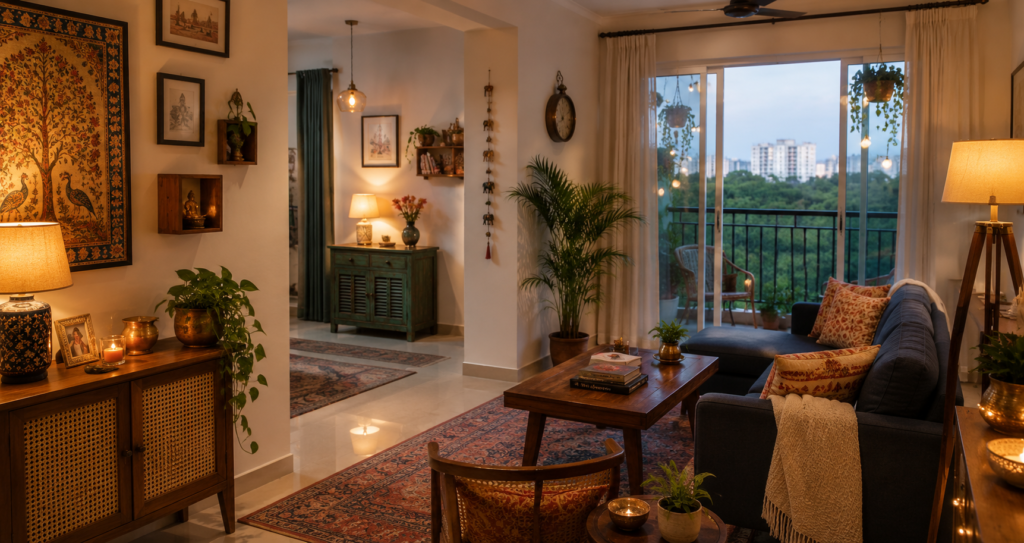
How to decorate a rented flat starts right here — the moment you signed the lease, paid the deposit (two months, sometimes three), moved your things in, and stood in the middle of the living room staring at four blank white walls. The landlord’s voice is already in your head: “Return it exactly as you found it.”
So you put up nothing. You hang nothing. You change nothing. And for the next two or three years — or however long you stay — you live inside a space that functions perfectly well as accommodation but never quite feels like yours.
This is the quiet compromise that millions of Indian renters make every year. Young professionals in Bengaluru and Hyderabad. Newly married couples in Pune and Chennai setting up their first home together. Families in Delhi NCR who relocate every few years and have learned not to invest too much in a space they’ll eventually leave. The desire to make a rented flat feel genuinely personal is universal. The fear of losing the security deposit keeps most people from acting on it.
Here’s what most renters in India don’t realise: the home décor market has changed significantly. Products designed specifically for renters — high-quality removable wall stickers, damage-free adhesive hooks, peel-and-press tiles, and tension-based fixtures — have made it entirely possible to transform a blank rental flat and reverse every single change in an afternoon when moving day arrives. No nail holes. No paint marks. No adhesive residue. Nothing the landlord can point to.
This guide covers the most effective, practical, damage-free approaches to decorating a rented flat in India — written specifically for the 2BHK in Koramangala, the studio near Powai, and every rented space between Chandigarh and Coimbatore.
The Security Deposit Problem — And Why It Doesn’t Have to Stop You
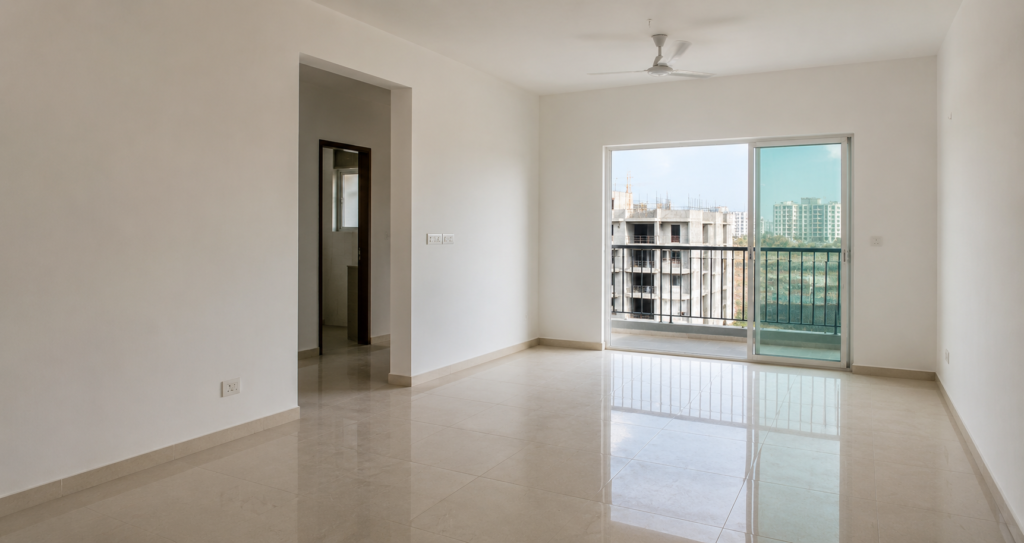
The fear is specific and reasonable. Indian rental agreements typically include a clause about restoring the property to its original condition. In cities like Mumbai, Bengaluru, and Delhi, security deposits of two to ten months’ rent are standard, and landlord disputes at tenancy end over wall marks, paint damage, or adhesive residue are genuinely common.
The three things landlords most frequently cite at deposit return time are nail holes in walls, paint discolouration or marks, and adhesive residue from tapes and stickers. All three are legitimate consequences of traditional decoration methods — nails, regular double-sided tape, painted accent walls.
But none of these are consequences of modern renter-friendly décor methods. The distinction that matters is this: the damage risk is from the method, not from decorating itself. Applied correctly on appropriate surfaces, removable wall stickers leave no residue. Adhesive picture-hanging strips leave no holes. Tension rods don’t touch walls at all. The technology now exists to fully personalise a rented flat and leave zero trace.
The only practical step to take before beginning: do a surface test. Apply a small piece of your chosen wall sticker or adhesive strip to an inconspicuous wall corner, leave it for 48 hours, and remove it. If the paint lifts, the wall has a fragile finish — usually old distemper paint — that needs more careful handling. Standard emulsion paint, which covers most modern Indian apartments, handles removable stickers and strips without any issue.
Start With Lighting — The Free Renovation
Before spending a single rupee on décor products, there is one change that costs almost nothing, leaves zero damage, and transforms the feel of any rental flat more dramatically than almost anything else: swap the lighting.
The standard light fitting in most Indian rental flats is a tube light or batten light that produces cold, flat white light. This kind of light makes every room feel like a government office regardless of how nicely the furniture is arranged. It is the single biggest reason rented flats feel institutional rather than warm — and it costs nothing to address.
Warm-white LED bulbs screwed into the existing fittings immediately shift the quality of light in a room. The colour temperature change — from the cool blue-white of tube lights to the warm amber-white of warm LED — changes how every surface, every colour, and every material in the room looks and feels. It is the fastest, cheapest, most impactful single change a renter can make.
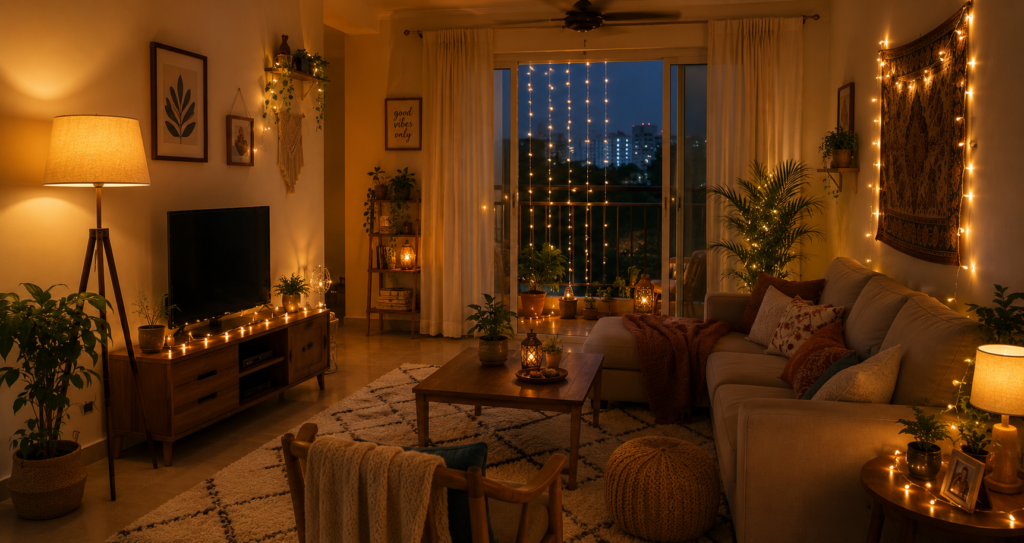
Beyond the main fittings, floor lamps and table lamps placed at lower heights create pools of warm light that make a room feel layered and considered rather than flatly lit from above. A floor lamp in a corner, a table lamp on the side table, and string lights draped along a bookshelf or behind a sheer curtain transform the evening atmosphere of a room entirely — all plugged into standard sockets, all taken with you when you move.
LED fairy lights deserve particular mention. A set of warm-white fairy lights draped across a shelf, wound around a curtain rod, or arranged in a glass jar on the coffee table creates a kind of ambient warmth that no overhead light can replicate. They’re available for a few hundred rupees, require no installation, and produce a visual result that looks genuinely styled rather than improvised.
Fix the lighting first. Everything else builds on top of it.
Wall Stickers — The Most Impactful Damage-Free Wall Decoration
Of all the damage-free décor tools available to Indian renters today, wall stickers are the most transformative — and the most underestimated. Most people still associate wall stickers with the cheap, cartoonish vinyl decals that were popular in the early 2000s. That product no longer represents what’s available.
Modern wall stickers include large-scale botanical prints, architectural line drawings, geometric patterns, celestial designs, typographic verses, and detailed murals that, applied carefully, look indistinguishable from a painted design at normal viewing distance. The matte finish of quality stickers reads as décor, not as sticker. The only thing that reveals them as removable is the fact that they can be peeled away cleanly when you choose.
The feature wall method is the most effective approach for renters. Rather than applying small stickers scattered across multiple walls — which can look busy and unconsidered — choose one wall per room as the visual focus and apply your sticker design there. In the living room, this is typically the wall behind the sofa. In the bedroom, it’s the wall the bed faces. A single large, well-chosen sticker on that wall does more for the room than a dozen small ones distributed elsewhere.
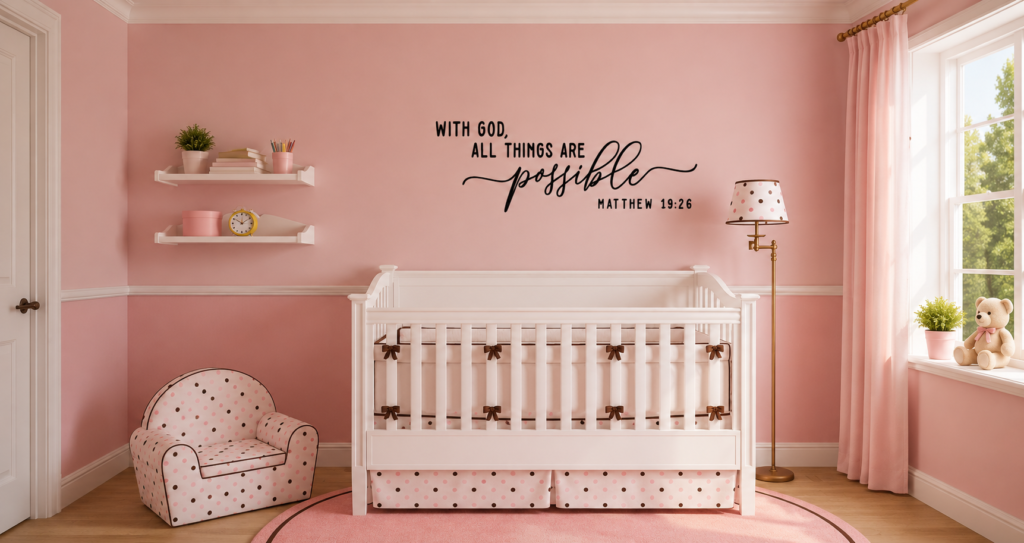
For the living room, a large botanical or abstract design creates a backdrop that makes the whole seating arrangement feel framed and intentional. For the bedroom, a trailing vine design or a set of verse words above the headboard replaces what would otherwise require a painted accent wall or an expensive piece of framed art. For a children’s room, the possibilities are even greater — jungle themes, space themes, alphabets, animals — all changeable as the child grows without leaving any trace.
Homepixi wall stickers are designed for exactly this kind of renter-friendly decoration — quality finishes that look intentional on a room’s feature wall and remove cleanly when moving day comes. Whether you’re styling a bedroom headboard wall, a living room feature wall, or a children’s room, the right sticker is often the single change that makes a rented flat feel genuinely like home.
How to apply wall stickers correctly in a rented flat:
Clean the wall surface with a dry cloth to remove dust — even invisible dust reduces adhesion. Ensure the surface is completely dry. Peel back a corner of the backing and apply the sticker slowly from one edge, smoothing toward the opposite side to prevent air bubbles. Use a flat card or the edge of a credit card to press out any bubbles as you go. When removing at the end of tenancy, peel slowly at a low angle — pulling directly away from the wall increases the risk of paint lifting.
Adhesive Strips and Hooks — Hang Frames Without a Single Nail
The inability to drive nails keeps many renters from hanging anything at all. They live with completely bare walls for years, telling themselves they’ll figure out the frame situation “eventually.” This is the most unnecessary compromise on this list.
Removable adhesive picture-hanging strips — available from multiple brands in India including Fevicol, 3M, and others — hold picture frames, mirrors, small shelves, and wall hangings securely on smooth walls. When removed correctly, they leave no damage on standard emulsion-painted surfaces.
Two rules matter enormously:
Respect the weight limits. Each pair of adhesive strips has a stated maximum load — typically between one and four kilograms per pair. For heavier items, use multiple pairs and distribute the weight evenly. Exceeding the limit is the primary cause of adhesive hook failures, and a falling frame that takes a chunk of plaster with it is exactly what you’re trying to avoid.
Remove correctly. The strip must be removed by pulling the tab slowly downward — parallel to the wall surface — not by pulling away from the wall. The stretching action of the tab is what releases the adhesive cleanly. This is stated on every pack of these strips and ignored by most first-time users who simply pull the frame off the wall.
With these rules observed, you can create a complete gallery wall of family photographs, art prints, and mirrors hung entirely with adhesive strips. Plan the arrangement on the floor before touching the wall — lay out every frame, photograph the final arrangement, then transfer to the wall using the photograph as your guide. Work from the centre outward. The result looks identical to a nail-hung gallery wall and comes down completely cleanly when you leave.
Use Textiles to Do What Paint Would Do
In a rented flat where wall interventions are limited, textiles carry a larger share of the decorative work than they would in an owned home. Cushions, throws, curtains, and rugs are all zero-damage, entirely removable, and among the most cost-effective ways to add colour, warmth, and personality to any space.
A large area rug transforms a living room more dramatically than almost any other single addition. Indian apartment floors are almost universally marble or vitrified tile — materials that are easy to clean but visually cold and acoustically hard. A rug placed under the seating area grounds the furniture arrangement, adds colour and texture, and makes the room feel quieter and warmer simultaneously. A good rug also sends a visual signal that someone has thought about this room — it reads as intention, not accident.
Cushions and throw blankets are the fastest way to change the colour palette of a room without touching a wall or buying new furniture. The sofa that came with the flat — or the one that’s been in the family forever — looks completely different with three new cushions and a folded throw draped over one arm. Change the cushions when the season changes. Take them all with you when you leave.
Curtains are the most overlooked textile in Indian rental flats. Most rentals come with either no curtains or the same mass-market sheer white curtains that have been there since the building was completed. Replacing these with curtains in a colour or print you’ve chosen costs two to four thousand rupees for a pair and changes the entire character of the room. Long curtains hung from the existing rod — or from a tension rod placed at ceiling height — make ceilings feel taller and rooms feel more considered. Take the curtains with you when you move; restore the original ones before leaving.
Make Furniture the Feature
In a rented flat where the walls cannot be permanently altered, furniture becomes the primary vehicle for personality and warmth. The way furniture is styled — what sits on it, around it, and next to it — determines whether a rented flat feels like a magazine shoot or a storage unit.
Bookshelves are the most versatile decorative element available. A bookshelf styled with a combination of books (organised by height or spine colour), small indoor plants, framed photographs, a candle, and a few meaningful objects becomes a feature that draws the eye and tells the story of the person who lives there — all without touching a single wall. It fills vertical space, adds colour and texture, and looks considered rather than accidental.
Plants bring life to spaces that paint cannot. A tall pothos or money plant on a high shelf creates a cascade of green that covers wall space naturally. A cluster of small succulents on the windowsill fills that particular Indian apartment surface that always seems to collect random objects. Multiple plants together in a corner create a density of life that makes a rented room feel inhabited and cared for in a way that almost nothing else can match — and they travel with you when you leave.
Small decorative objects on a tray transform a surface from a landing pad into an intentional arrangement. A trinket tray on the entryway console, the coffee table, or the bedside table — holding a small candle, a plant, and a coaster — sends the visual message that someone has considered this space. It also practically contains the small items that otherwise scatter across every horizontal surface in the flat.
Decorating Specific Rooms: Focused Strategies
The living room: The goal is a space that looks designed without looking decorated. A large wall sticker or gallery wall on the feature wall behind the sofa. Warm lighting from a floor lamp in one corner. A rug anchoring the seating. A styled bookshelf or TV unit. Cushions and a throw on the sofa. Every change removable; together, a room that looks completely intentional.
The bedroom: The wall the bed faces is the opportunity. A large wall sticker — a botanical trailing design, a geometric pattern, a meaningful verse or quote — applied above and around the headboard replaces what an accent wall or an expensive piece of art would achieve in an owned home. Layered cushions on the bed. A bedside lamp in warm light. A small plant on the dresser. A rug on the floor beside the bed for the morning.
The children’s room: This is where wall stickers are perhaps most transformative and most clearly justified. A jungle theme or space theme or alphabets-and-animals arrangement applied to the main wall turns a blank box into a room that a child experiences as genuinely theirs. As they grow and interests change, the stickers come off and new ones go on — no repainting required, no landlord conversation needed.
The kitchen: A few strategically placed small stickers near the cooking area — a small herb labels design, a set of measurement conversions, a simple botanical print near the window — add character to the most functional room in the flat without any permanence. Keep these away from direct heat and steam.
The entryway: The first impression of your flat. A styled coat hook (adhesive-mounted), a small shelf with a trinket tray for keys and loose items, a plant on the floor, a good doormat. These four additions take thirty minutes to set up, cost under a thousand rupees combined, and mean that every time you come home you enter a space that has been thought about.
Before You Leave — Reversing Everything Cleanly
The end of a tenancy is when renter-friendly décor pays off its promise. With these methods, the reversal process is straightforward.
Wall stickers: Peel slowly from one corner, keeping the sticker flat against the wall at a low angle. If any residue remains — rare with quality stickers on emulsion paint — a small amount of vegetable oil on a cloth, left for a minute and then wiped away, removes it cleanly. Finish with a damp cloth.
Adhesive strips and hooks: Pull the removal tab downward slowly and steadily — the stretching action releases the adhesive cleanly from the wall. Do not rush this step. Slow removal takes fifteen seconds; fast removal risks paint.
Curtains and textiles: Remove, fold, take. Replace original curtains if any were provided.
Furniture rearrangements: Return to original layout if this was specified in the agreement.
The entire reversal of a well-decorated two-bedroom rental flat should take two to three hours. Compare this to the months of living in a space that feels borrowed rather than yours.
faq
Quality removable wall stickers applied to standard emulsion-painted walls and removed correctly — by peeling slowly at a low angle — leave no damage and no residue. Always do a small patch test first in an inconspicuous corner, particularly in older flats where distemper paint may be present, as this finish is more fragile than emulsion.
Removable adhesive picture-hanging strips are the most reliable damage-free option for India. Apply on a clean, dry wall surface, observe the weight limits on the packaging, and remove by pulling the tab slowly downward rather than pulling the frame away from the wall.
Start with lighting — replace tube light bulbs with warm-white LEDs and add a floor lamp. Add a large rug, change the curtains, bring in plants, and use one wall sticker on the living room feature wall. These five changes together typically cost under ₹5,000 and produce a dramatic transformation.
Standard emulsion paint — the most common finish in modern Indian apartments — is ideal for removable wall stickers. Distemper paint, texture paint, and very old or chalky surfaces require more caution. Always test a small sticker in a hidden corner before applying your main design.
Your rented flat deserves to feel like yours — and it can, without touching a single nail. Browse Homepixi’s home décor collection for removable wall stickers designed for Indian homes — botanical prints, verse designs, and room-specific collections that peel on cleanly and come off without a trace. Shop here →