

A good Monsoon Home Care Guide starts with acknowledging the obvious: the first rain of the season is always welcome. The smell of wet earth, the drop in temperature after months of punishing heat, the sound of rain on the roof and against the windows — there’s a reason Indians celebrate the monsoon the way they do. After April and May, those first dark clouds feel like relief.
But by week three of continuous rain, the romance starts wearing thin. The kitchen smells faintly of something you can’t quite identify. The living room feels damp even with the windows closed. The wooden furniture has swollen slightly and the drawers don’t slide the way they did in March. There’s a patch on the wall near the window that’s taken on a colour it didn’t have before. The masalas that were perfectly dry a month ago are now clumping in their containers.
This is monsoon reality in Indian homes — and it affects almost every household across the country, from coastal Kerala where humidity peaks early and stays late, to Mumbai where the combination of heavy rain and salt air creates a particularly aggressive environment for homes, to Bengaluru where the rain is gentler but persistent enough to cause its own set of problems.
The good news is that most monsoon damage to homes is preventable. Not with expensive waterproofing treatments or major renovation — with consistent, proactive care that starts before the rains arrive and continues through the season. This guide covers the kitchen and the living space specifically, because these are the two rooms where monsoon damage is most common and most disruptive to daily life.
Understanding What Monsoon Does to Your Home
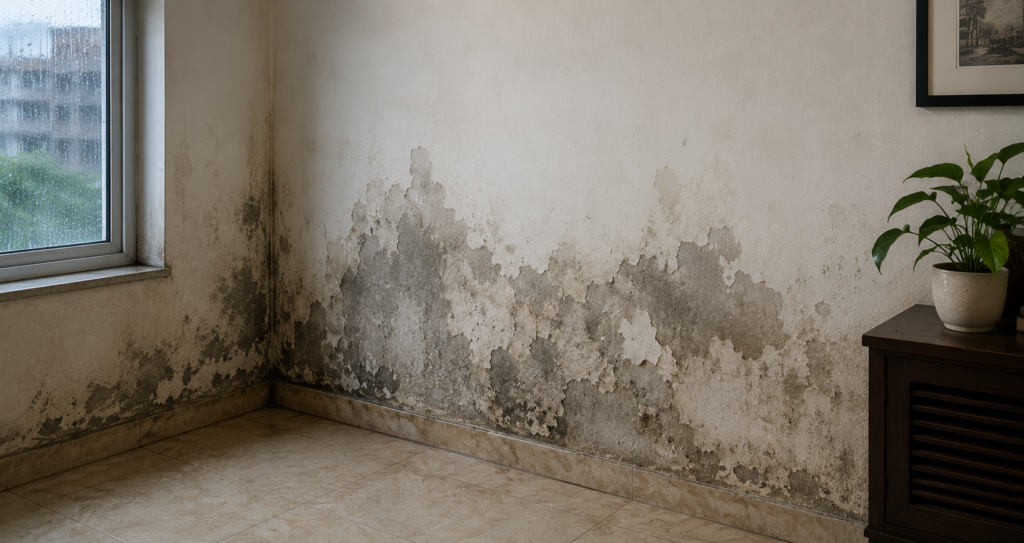
Before getting into solutions, it’s worth understanding exactly what the monsoon season does to a home’s interior — because the damage is rarely dramatic and sudden. It’s slow, cumulative, and often invisible until it becomes a serious problem.
Humidity is the primary culprit. During the Indian monsoon season, outdoor relative humidity regularly exceeds 80 to 90 percent in most cities. This moisture migrates indoors through every gap — under doors, through window frames, through walls themselves in older buildings. Once inside, it raises the indoor humidity to levels that create problems for almost every material in your home.
Wood swells. Furniture joints loosen. Wooden flooring warps. Cabinet doors that closed perfectly in summer suddenly need force to shut. This isn’t a quality issue with the furniture — it’s physics. Wood absorbs moisture from humid air and expands. The process reverses as humidity drops after the season, but repeated cycles of swelling and shrinking weaken joints and finishes over years.
Metal rusts. Steel kitchen utensils, iron tawa handles, the hinges on cabinet doors, the screws holding shelves in place — all of these are vulnerable to surface rust in a high-humidity environment. The rust is usually superficial and not dangerous, but it stains surfaces and indicates that moisture levels are higher than ideal.
Spices clump and degrade. Ground masalas absorb moisture from the air, causing clumping, texture changes, and accelerated flavour loss. This is why biryani masala that was perfectly dry in April starts behaving differently in July — it’s absorbed humidity from the kitchen air.
Mould and mildew grow. In areas where moisture accumulates — under the kitchen sink, behind the refrigerator, in bathroom-adjacent walls, in poorly ventilated corners — mould can establish itself within 48 to 72 hours of consistent moisture exposure. Once established, it spreads and is difficult to remove completely without addressing the underlying moisture source.
Understanding these mechanisms makes the solutions more intuitive — every protective measure is essentially an attempt to keep moisture out or to remove it faster than it can accumulate.
Monsoon Home Care Guide: Where to Start

The kitchen is the most vulnerable room in an Indian home during monsoon season. It combines heat, moisture from cooking, and the ambient humidity of the season into an environment that accelerates almost every form of damage. A kitchen that isn’t managed carefully during this period will show it — in rusted utensils, clumped masalas, smelly drain areas, and swollen cabinet doors.
Start with the spice and masala storage. This is the most immediate monsoon kitchen concern for most Indian households. Ground spices are hygroscopic — they actively absorb moisture from the air — and in a humid monsoon kitchen, they can go from perfectly dry to visibly clumped within days if stored in loosely sealed containers.
The upgrade from loosely sealed containers to airtight ones is the single most impactful change you can make to your kitchen before the rains arrive. Airtight glass jars with rubber-sealed lids keep moisture out effectively. But for bulk masala quantities — the kilogram of red chilli powder bought from the market, the coriander and cumin stocked up before the season — airtight jars alone may not be sufficient for long-term storage.
This is where vacuum sealing becomes genuinely valuable during monsoon season. By removing the air from around the masala before sealing, vacuum sealing eliminates the moisture-carrying medium entirely. A vacuum-sealed packet of turmeric or garam masala stored in a cool cabinet during monsoon will emerge at the end of the season in exactly the same condition it went in — dry, aromatic, and full-strength.
Homepixi vacuum sealer rolls are particularly useful for this seasonal kitchen care — cut them to whatever size your portion requires, seal in your bulk masalas before the rains arrive, and store with complete confidence. The food-grade material keeps moisture out entirely, and the roll format means you can create packets in any size from a small portion of freshly ground garam masala to a larger quantity of whole spices.
The Under-Sink Area — Monsoon’s Most Neglected Problem Zone
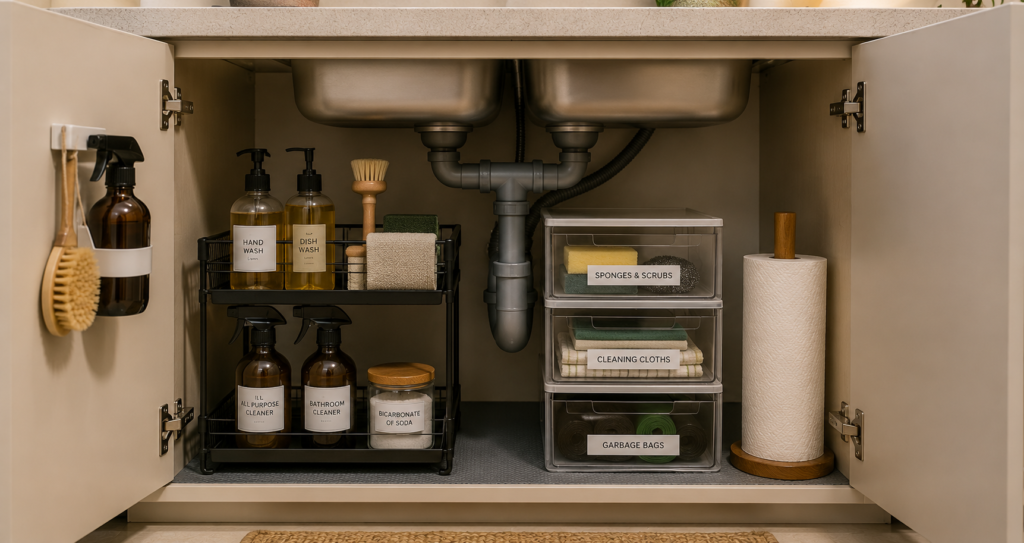
The cabinet under the kitchen sink is where monsoon problems quietly begin in most Indian homes. It’s already a damp-prone area at the best of times — minor drips from the pipe connections, condensation on cold pipes during cooking, occasional splash-back from dishwashing — and monsoon season intensifies all of these.
Left unattended, the under-sink cabinet during monsoon becomes an ideal environment for mould, mildew, and the particular smell that follows them.
Clear the cabinet completely before the season starts. Remove everything — cleaning supplies, extra dish soap, plastic bags, whatever lives under your sink. Wipe the interior down with a dry cloth and then with a diluted white vinegar solution, which kills existing mould spores and inhibits new growth. Allow it to dry completely — ideally with the cabinet door open for several hours — before putting anything back.
Check the pipe connections for slow drips. A slow drip that’s barely noticeable in dry weather becomes a significant moisture source over a three-month monsoon season. Run water for a minute and then look carefully at every joint and connection under the sink. If anything is dripping, fix it before the rains arrive — a plumber’s visit costs far less than dealing with the mould that three months of slow dripping produces.
Line the cabinet floor with a waterproof mat or tray. This creates a barrier between any moisture that does accumulate and the cabinet wood or MDF underneath. A waterproof tray also makes cleaning easier — pull it out, wipe it down, replace it.
Store only waterproof or moisture-resistant items under the sink during monsoon. Cleaning supplies in plastic bottles are fine. Paper bags, cardboard boxes, cloth items, or anything that would be damaged by moisture should be moved elsewhere for the duration of the season.
Kitchen Ventilation — The Most Underrated Monsoon Tool
Ventilation is the mechanism by which moisture is removed from indoor spaces — and it’s the most underused tool in monsoon home care, largely because it feels counterintuitive to open windows when it’s raining outside.
The key distinction is between damp outdoor air and stagnant humid indoor air. In most cases, moving air — even slightly humid outdoor air — is better for your home’s interior than still, stagnant air that allows moisture to concentrate in corners and on surfaces.
Run the kitchen exhaust fan whenever cooking. During monsoon, cooking generates significant additional steam and moisture in a kitchen that’s already humidity-saturated. Running the exhaust fan through every cooking session removes this moisture before it can settle on surfaces, condense on tiles, or be absorbed by wooden cabinets.
Open the kitchen window in the morning when rain has paused. The brief dry windows between rain spells are the best time to flush stagnant air from the kitchen. Even fifteen to twenty minutes of cross-ventilation significantly reduces indoor humidity accumulation.
Keep the refrigerator’s back coils clean. The refrigerator generates heat from its motor coils, and in a humid monsoon kitchen, this heat combines with moisture to create condensation on nearby surfaces. Cleaning the coils at the start of monsoon season (a dry cloth wipe, with the fridge pulled slightly forward) improves efficiency and reduces the heat generated.
A Pre-Monsoon Checklist for Indian Homes
The most effective monsoon home care is done before the first rain, not in response to the first problem. Here’s a practical checklist for the two to three weeks before monsoon arrives:
Kitchen:
Transfer all ground masalas and bulk spice stocks into airtight containers or vacuum-sealed packets. Check the under-sink cabinet for existing moisture and treat with vinegar solution. Check pipe connections for slow drips and fix any found. Clean the exhaust fan filter — a clogged filter reduces ventilation effectiveness when it’s needed most.
Living room:
Apply furniture polish or beeswax to all wooden pieces. Add felt pads or rubber cups to furniture legs. Treat fabric sofas and upholstered chairs with fabric protector spray. Wash and thoroughly dry curtains before the season begins. Check windowsills for gaps and seal with silicone if needed.
Entryway:
Set up a dedicated wet shoe area with a drip tray. Place an umbrella stand with tray at the entrance. Ensure the indoor doormat is thick and absorbent. Designate a hanging spot for wet raincoats away from the main living space.
Walls:
Walk through all rooms and photograph any existing cracks, peeling paint, or previous damp patches. Seal window and door frame gaps with silicone sealant. In owned properties, consider applying waterproofing compound to exterior-facing walls.
Completing this checklist before the rains arrive costs less than two hours and a modest amount of money — and prevents the kind of damage that would otherwise take weeks to repair after the season ends.
FAQ
Transfer all ground masalas into airtight glass or steel containers immediately before the season. For bulk quantities, vacuum sealing removes moisture-carrying air entirely and keeps masalas dry and potent throughout the monsoon. Always use a dry spoon when accessing spices during humid months.
The combination of ventilation, moisture control, and clean dry surfaces prevents most kitchen mould. Run the exhaust fan during all cooking, keep the under-sink cabinet dry and well-ventilated, and wipe down surfaces — particularly tile grout lines — regularly with a diluted white vinegar solution.
Apply furniture polish or beeswax before the season begins to create a moisture barrier on the surface. Keep wooden furniture away from windows and exterior walls where condensation is highest. Use rubber or felt pads under furniture legs to prevent moisture absorption from damp floors.
Yes, portable dehumidifiers are effective and safe for managing indoor humidity during monsoon. They’re particularly useful in rooms with poor ventilation, on lower floors where ambient humidity is higher, and in homes in coastal cities where seasonal humidity is most extreme.