
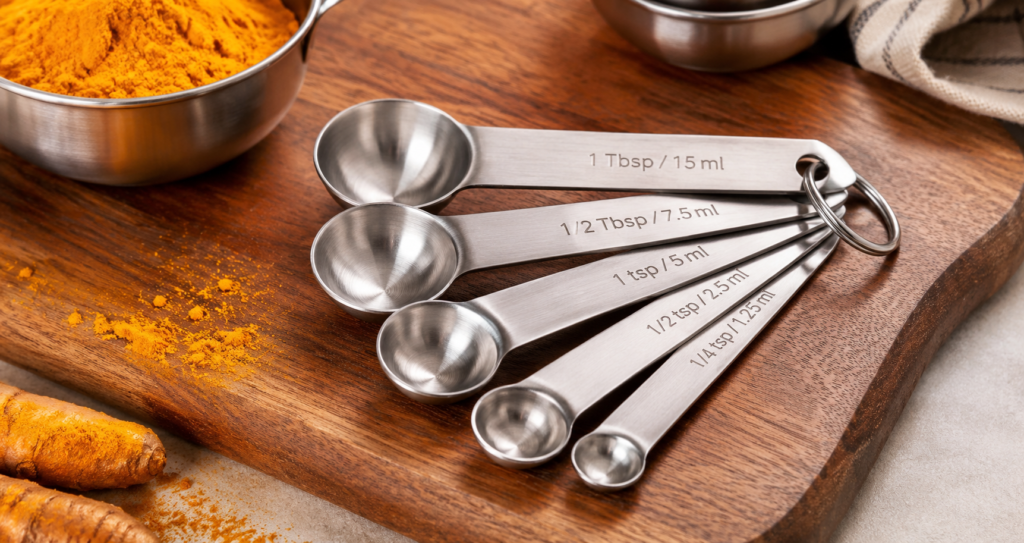
Stainless steel measuring spoons are quickly becoming the go-to choice for Indian home cooks, and once you compare them side-by-side with plastic, it’s easy to see why. Between daily tempering, turmeric-heavy gravies, and the humid conditions of an Indian kitchen, your measuring spoons take more abuse than almost any other tool in your drawer. So which one actually survives – steel or plastic? Let’s break it down.
Why Measuring Spoon Material Actually Matters
Most people don’t think twice about their measuring spoons – until they crack, stain, or start smelling like last week’s sambar. In Indian cooking, spoons are exposed to hot oil, acidic ingredients like tamarind and lemon, and pigment-heavy spices like turmeric and red chilli powder. Over time, the material of your spoon determines whether it still looks and performs the same after six months, or whether you’re replacing it every festival season.
Plastic Measuring Spoons: The Common Choice
Plastic spoons are lightweight, inexpensive, and often come bundled free with kitchen sets. But in an Indian kitchen environment, they show wear fast:
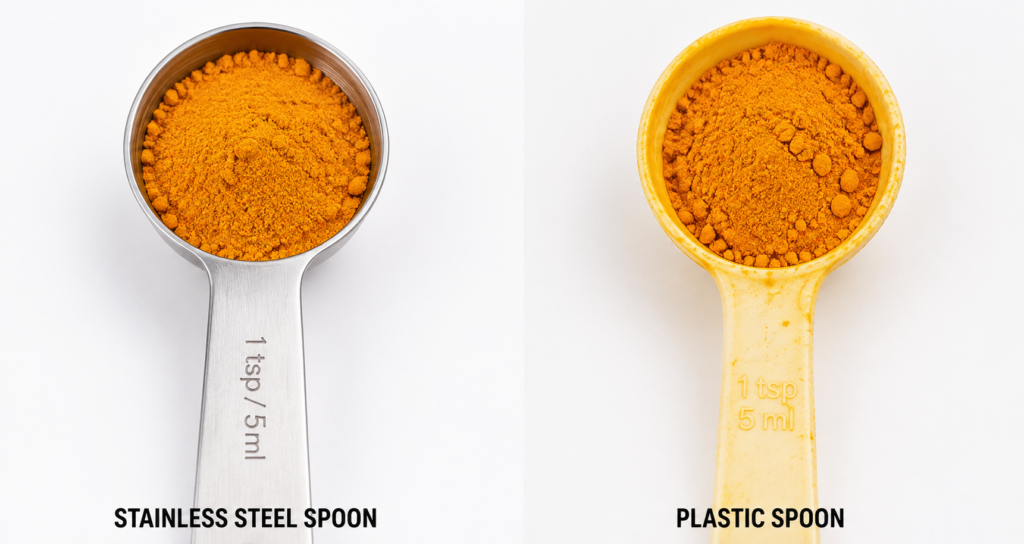
- Turmeric and chilli staining : plastic is porous at a microscopic level, so pigmented spices leave permanent yellow or orange stains within weeks.
- Warping near heat : leaving a plastic spoon too close to a hot tadka pan or gas flame can bend or melt the handle.
- Odour retention : strong spices like hing (asafoetida) and garlic tend to linger in plastic long after washing.
- Cracking over time : repeated dishwasher cycles or hot water make plastic brittle, and cheaper spoons snap at the handle joint within a year.
Stainless Steel Measuring Spoons: Built for Daily Indian Cooking
Stainless steel measuring spoons, particularly those made from 304-grade steel, are the more durable option for a kitchen that sees daily use:
- Stain and odour resistant — steel doesn’t absorb turmeric, chilli, or garlic smells the way plastic does.
- Heat safe — you can rest a steel spoon on the edge of a hot pan or use it to scoop straight from simmering dal without worrying about melting.
- Rust resistant — food-grade 304 stainless steel resists corrosion even with frequent washing, unlike lower-grade metal spoons that develop spots.
- Long-term durability — steel spoons don’t crack, chip, or bend under normal use, so a good set can realistically last a decade or more.
- Dishwasher and hard water safe — steel handles India’s variable water quality far better than plastic, which can develop a cloudy film over time.
Accuracy: Does Material Affect Measurement?
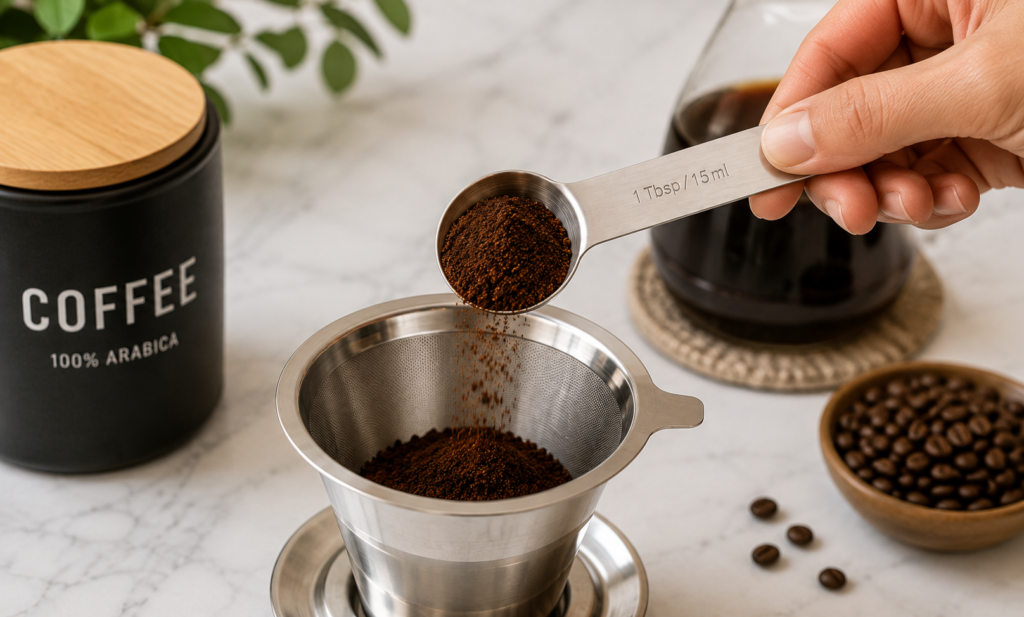
This is one area people overlook. Plastic spoons can warp slightly with heat exposure, which subtly changes their volume over time — a problem for baking, where precision matters. Stainless steel measuring spoons hold their exact shape and calibrated volume for the life of the product, making them the more reliable choice for recipes that need consistent results, from cake batters to filter coffee ratios.
Cost Comparison: Is Steel Worth the Extra Price?
Plastic measuring spoons are cheaper upfront, often by ₹50–100 per set. But if you’re replacing a warped or stained plastic set every 8–12 months, the long-term cost adds up. A well-made stainless steel set costs more initially but typically needs replacing far less often, which makes it the more economical choice over a 3–5 year period — not to mention it looks better on open kitchen shelving.
Which Should You Choose for Your Kitchen?
- Choose stainless steel measuring spoons if you cook daily, use turmeric- or oil-heavy recipes, want long-term durability, or care about your kitchen tools looking clean and presentable.
- Choose plastic only if you need a lightweight, one-time-use option for occasional or light cooking, or you’re on a strict short-term budget.
For most Indian households, where the kitchen is in near-daily use and spices are unavoidable, stainless steel measuring spoons are the more practical long-term investment.
Caring for Your Stainless Steel Measuring Spoons
To get the maximum lifespan out of your set:
- Hand wash with a mild dish soap for daily use, even though most sets are dishwasher-safe.
- Dry immediately after washing to prevent water spotting.
- Avoid using steel wool or abrasive scrubbers, which can dull the finish.
- Store in a dry drawer or hanging rack rather than a damp spot near the sink.
FAQ
Yes. Stainless steel measuring spoons resist staining, odour, and heat damage far better than plastic, making them more suitable for the daily wear of Indian kitchens.
Food-grade 304 stainless steel measuring spoons are highly rust-resistant and safe for regular washing, including dishwasher use.
Plastic is porous, so pigmented spices like turmeric and chilli powder stain it permanently over repeated use -something steel spoons don’t experience.
With proper care, a good quality stainless steel measuring spoon set can last 8–10 years or longer, compared to 1–2 years for most plastic sets.