
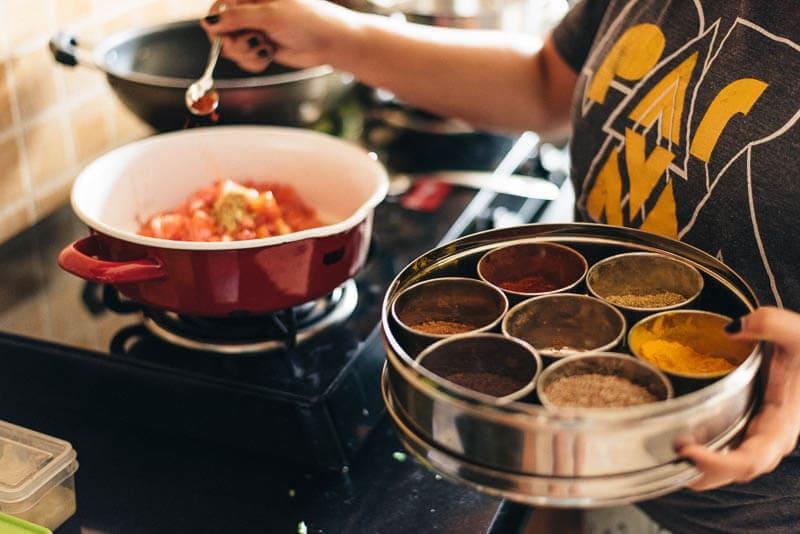
There’s a particular kind of confidence that develops after a few years of cooking Indian food. You stop measuring. The haldi goes in by feel, the sugar is a “little bit,” the coffee is however much looks right in the spoon. It mostly works – until it doesn’t, and you’ve made six cups of chai that taste like medicine, or a cake that came out dense and slightly bitter.
Measuring ingredients properly is one of those habits that seems like overkill in everyday cooking but makes a real difference the moment you try anything precise – baking, coffee brewing, protein shakes, portion-controlled meals, or recreating a dish that came out perfectly the first time.
This post covers exactly that: how to measure correctly, what tools you actually need, and why the right equipment makes it easier to cook consistently rather than hoping you got lucky.
Why Guessing Works Until It Doesn’t
In traditional Indian cooking, most recipes are written in terms of “as needed” and “to taste” – which is genuinely the right approach for things like salt, oil, and spice adjustments. Experienced cooks develop calibration through repetition, and that intuition is valuable.
But guessing has limits. Consider a few scenarios where it goes wrong:
Baking – atta, maida, cocoa powder, and baking soda all behave very differently depending on exact quantities. Too much baking soda in a cake doesn’t just fail to rise; it leaves an unpleasant aftertaste. The difference between a good banana bread and a dense, gummy one is often 20 grams of flour.
Coffee brewing – anyone who’s started making proper espresso or pour-over at home knows this. The ratio of coffee to water determines strength, bitterness, and flavour balance. Even a small deviation changes the result noticeably.
Protein and nutrition tracking – if you’re tracking macros or managing a health condition that requires careful carbohydrate or sodium monitoring, eyeballing portions defeats the purpose entirely.
Medicines and supplements – many health powders, vitamin supplements, and herbal mixes come with specific dosages measured in grams or millilitres. Using the wrong amount consistently isn’t just imprecise, it’s potentially counterproductive.
The Two Tools Every Indian Kitchen Actually Needs
You don’t need an elaborate kit. Most kitchen measuring problems can be solved with exactly two things: a good set of measuring spoons, and a good set of measuring cups. That’s it.
Measuring Spoons
Standard measuring spoons cover 1/4 tsp, 1/2 tsp, 1 tsp, 1/2 tbsp, and 1 tbsp. These are the measurements used in virtually every recipe – Indian and international – and they correspond to the quantities where precision matters most: spices, leavening agents (baking powder, baking soda), condiments, and coffee.
The problem with cheap measuring spoon sets is that the heads are often too wide to fit into standard spice jars, which means you end up pouring spice into the spoon rather than scooping, which is slower and messier. A good set will have a narrow, oval head that slides into the mouth of a typical masala jar without any awkwardness.
The Homepixi Magnetic Measuring Spoon Set of 5 is designed specifically with this in mind – the dual-sided head is shaped to fit into narrow jars, and the spoons stack together magnetically so they don’t rattle loose in a drawer or hang separated on a loose ring. Made from rust-resistant stainless steel, they’ll hold up through hand-washing without warping or developing the kind of rough edges that collect food residue. At ₹699 for a set of five, it’s one of the more sensible kitchen investments you can make.
Measuring Cups
Measuring cups are used for larger volumes – flour, rice, milk, oats, lentils – and they come in 1/4 cup, 1/3 cup, 1/2 cup, and 1 cup sizes as standard. For most cooking, cups cover volumes where a few grams of variation don’t matter much; for baking, they need to be level-filled (not heaped) to be accurate.
The Homepixi Measuring Cup Set of 7 includes engraved (not printed) measurement markings – which matters because printed markings on measuring cups fade after repeated washing, leaving you guessing about which cup is which.
How to Measure Correctly: The Technique Matters
Having the right tools is step one. Using them correctly is step two.
For dry ingredients (flour, sugar, cocoa, spice powders): scoop into the measuring spoon or cup, then level it off with a straight edge – the back of a knife, or your finger. Do not tap the spoon or press the ingredient down. Tapping packs the ingredient, which means you’re actually using more than the recipe calls for.
For sticky or semi-solid ingredients (ghee, honey, peanut butter): lightly spray or oil the inside of the measuring spoon first. The ingredient slides out completely instead of sticking to the spoon and leaving you with an imprecise amount (and a messy spoon).
For liquids: pour into the measuring cup and check at eye level, not from above. Liquid measurement read from above looks different due to the angle; the reading at eye level against the measurement markings is accurate.
For spices: scoop rather than pour where possible. When you shake a spice container over a spoon, you get an inconsistent amount depending on how you’re holding it. Scooping with a narrow measuring spoon gives a consistent level scoop every time.
The Special Case of Coffee
If you’ve recently started making coffee at home beyond the standard instant variety, measuring becomes considerably more important – and also more interesting.
The basic ratio for espresso-style coffee (stovetop moka pot) is typically 1:7 to 1:9 – coffee to water by weight. For pour-over, it’s usually 1:15 to 1:17. These ratios produce consistently good results regardless of the specific bean, grind, or brand you’re using. When you eyeball it, you’re essentially re-experimenting every morning.
For milk-based drinks – cappuccino, latte, flat white – the ratio of milk to espresso changes the character of the drink significantly. A cappuccino is roughly 1/3 espresso, 1/3 steamed milk, 1/3 milk foam. A latte leans much heavier on the milk.
To make any of these properly at home, you need a pitcher to steam and pour the milk. The Homepixi Stainless Steel Milk Frothing Pitcher 600ml is designed for exactly this – the 600ml capacity handles a single or double serving, the anti-scald handle means you can hold it while the milk heats up, and the pointed spout gives you enough control to pour through froth rather than dumping everything in at once. If you’re using a handheld milk frother, this pitcher is the right vessel to use it in: deep enough that you don’t spray milk across the counter, and the right material (stainless steel) to retain heat without picking up flavours from previous use.
Common Measuring Mistakes in Indian Kitchens
A few that come up regularly:
Using a coffee “scoop” as a tablespoon measurement. Standard coffee scoops are usually 2 tablespoons, not 1. If a recipe calls for 1 tbsp of coffee and you use a coffee scoop, you’ve doubled it.
Measuring spice powders with heaped spoons. Most Indian recipes that specify “1 tsp of red chilli powder” mean a level teaspoon. A heaped teaspoon of Kashmiri lal mirch isn’t just more red – it’s potentially a different dish.
Using the same spoon for everything without rinsing. If you measure oil in a spoon and then measure sugar with the same spoon, the sugar will clump and stick. Rinse and dry between uses for dry ingredients, or measure dry ingredients before wet ones.
Treating “1 cup” as generic. A standard measuring cup in recipes is 240ml. Some older Indian recipe books use a 200ml standard. If you’re following a recipe and the proportions seem off, check which standard the recipe is using.
Building the Habit
Measuring precisely doesn’t mean you have to do it for every dish. Dal, sabzi, rice, roti – these don’t need it and shouldn’t require it. But for baking, coffee, supplements, and any dish you’re trying to replicate consistently, measuring once and getting it right is faster than adjusting and guessing repeatedly.
The investment is small – a good set of measuring spoons and cups together cost less than a typical restaurant dinner for two in any Indian city. The return is dishes and drinks that come out the way you intended, and a kitchen where you’re in control of what you’re making.
Measuring ingredients correctly helps ensure consistent results, especially in baking, coffee brewing, protein shakes, and recipes that require precise ratios. Even small variations in ingredients like flour, baking powder, or spices can affect the texture, taste, and overall outcome of a dish. Proper measurement eliminates guesswork and makes recipes easier to replicate.
Most Indian kitchens only need two essential tools: a set of measuring spoons and a set of measuring cups. Measuring spoons are ideal for spices, coffee, baking powder, and condiments, while measuring cups are used for flour, rice, lentils, milk, and oats. These tools help improve accuracy without adding complexity to everyday cooking.
For dry ingredients such as flour, sugar, cocoa powder, and spice powders, fill the measuring spoon or cup and level it off with a straight edge. Avoid pressing or tapping the ingredient, as this packs it down and results in using more than the recipe requires. Level measurements provide the most accurate and consistent results.
Yes. Regular kitchen spoons vary greatly in size and are not designed for accurate measurements. Standard measuring spoons provide fixed quantities such as ¼ teaspoon, ½ teaspoon, 1 teaspoon, and 1 tablespoon, making them essential for baking, coffee preparation, supplements, and recipes where precision matters.