
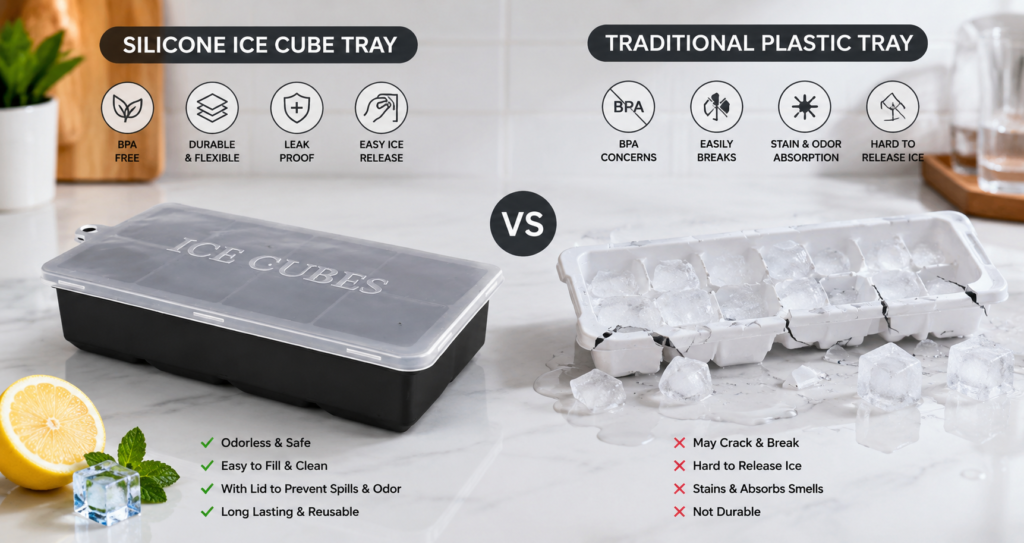
There’s a tray sitting in almost every Indian freezer that nobody thinks about until it fails you. You reach for ice on a summer afternoon, give the plastic tray a twist, and either nothing budges or three cubes shoot across the kitchen floor. Half the compartments are cracked. One corner has been held together with sheer stubbornness since 2019. And yet it stays in the freezer, because buying a new ice tray has never felt like a priority.
That’s starting to change. Walk through any kitchenware section online right now and silicone ice cube trays are quietly taking over the space plastic used to own. It’s not a marketing trend — it’s a practical one. Once people switch, they rarely go back to plastic, and the reasons come down to a handful of everyday frustrations that silicone simply solves better.
The Real Problem With Plastic Ice Trays
Plastic ice trays were never designed with much thought. They’re stiff, they’re rigid, and getting ice out of them means twisting, banging, or running the tray under hot water — none of which feels great when you’re just trying to cool down a glass of nimbu paani.
Over time, plastic trays develop a few predictable issues:
- They crack. Cold plastic becomes brittle, and repeated twisting eventually splits the compartments.
- They absorb odours. Plastic is porous at a microscopic level, and if your freezer has strong-smelling items like fish or leftover sabzi, that smell can transfer into your ice.
- They stain. Anyone who’s frozen turmeric water, beetroot juice, or coloured drinks in a plastic tray knows the yellow or pink tint doesn’t fully wash out.
- They’re noisy and awkward to empty. Twisting a full tray over the sink usually means at least one cube escaping onto the counter.
None of this makes plastic trays unusable. It just means they’ve quietly been the weakest link in an otherwise well-stocked Indian kitchen.
Why Silicone Performs Differently
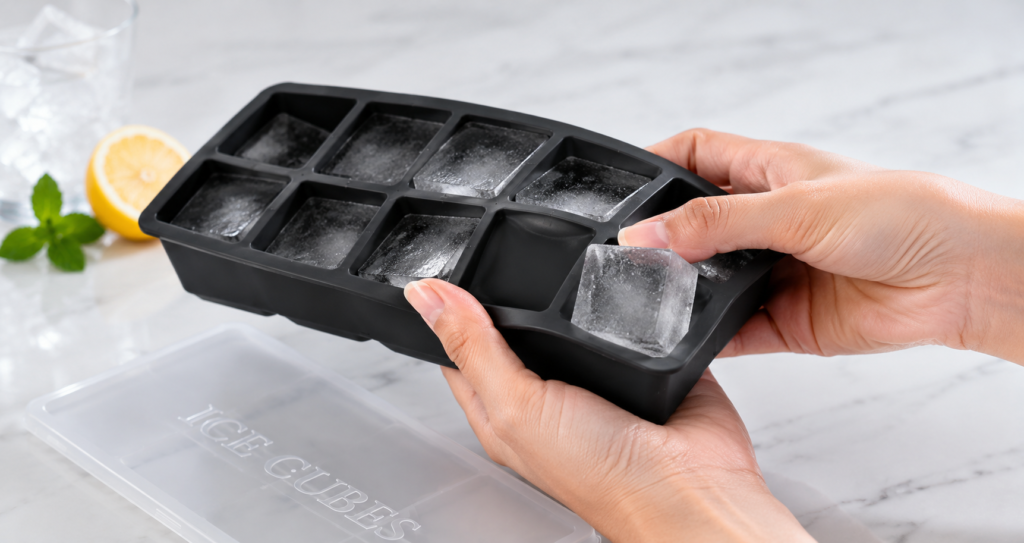
Silicone solves most of these problems simply because of the material itself. It’s flexible, non-porous, and food-grade — which changes the entire experience of making and using ice at home.
1. Cubes pop out without a fight. Because silicone flexes, you don’t need to twist or bang the tray against the counter. A gentle push from underneath releases the cube cleanly, one at a time or all at once, without cracking anything.
2. It doesn’t hold on to smells or stains. Silicone’s non-porous surface means it doesn’t absorb odours from the freezer or discolour after freezing coloured liquids. Ice made in a silicone tray tastes like water — not like whatever else is sharing freezer space with it.
3. It’s genuinely more durable. Good-quality silicone doesn’t become brittle in the cold the way plastic does. It can flex thousands of times without cracking, splitting, or losing shape, which is exactly why silicone trays tend to outlast plastic ones by years, not months.
4. It’s easier to clean. Silicone trays are typically dishwasher-safe and don’t develop the cloudy, scratched look plastic gets after repeated washing. A quick rinse usually does the job.
5. Trays with lids solve a very Indian kitchen problem. Most Indian freezers are packed — vegetables, leftovers, ice cream, sometimes even meat for the week. An open ice tray sitting in that environment is an invitation for smell transfer. A silicone tray with a snap-on lid, like the Homepixi Silicone Ice Cube Tray with Lid, keeps ice sealed off from everything else in the freezer, which matters far more in a compact Indian kitchen fridge than in a spacious Western one.
Is Silicone Actually Safe for Food?
Plastic isn’t entirely without merit. It’s usually cheaper upfront, slightly more rigid for stacking in tight freezer spaces, and doesn’t need to be handled as gently as silicone during storage. For someone who makes ice only occasionally and isn’t fussy about smell transfer, a basic plastic tray will still technically do the job.
But for daily use — which is how most Indian households actually use ice trays, especially through summer — the durability and hygiene gap between the two materials becomes hard to ignore within a few months
How to Choose a Good Silicone Ice Tray
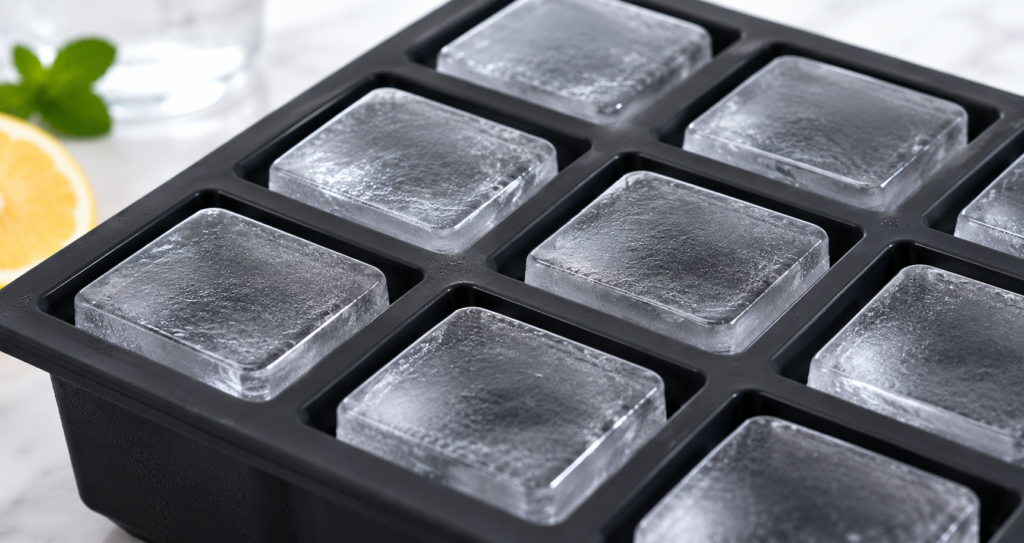
Not all silicone trays are equal. A few things worth checking before you buy:
- Look for “food-grade silicone” explicitly mentioned, not just “silicone.”
- Check if it comes with a lid. This single feature makes the biggest practical difference in a shared Indian freezer.
- Test the flex. Good silicone should feel firm, not floppy — floppy trays are harder to carry to the freezer without spilling water.
- Prefer a tray that’s dishwasher and microwave safe, even if you don’t plan to use those features immediately.
- Check compartment size. Standard cube size works for drinks; smaller compartments suit cocktails, coffee cubes, or baby food purees.
Beyond Ice: Why This Tray Earns Its Freezer Space
A quality silicone ice tray with a lid isn’t a one-season purchase. Once summer ends, it doesn’t have to sit idle — the same tray works for freezing leftover coconut milk, portioning ginger-garlic paste, setting chocolate, or storing small portions of baby food. It’s one of those quiet kitchen upgrades that ends up used far more often than people expect when they first buy it.
faq
Yes, for regular use. Silicone doesn’t crack, stain, or absorb odours the way plastic does over time, and it’s easier to release ice from without breaking the tray.
No, genuine food-grade silicone is non-porous and doesn’t transfer taste or smell to the ice, unlike plastic which can absorb odours from the freezer.
Yes, especially in Indian kitchens where freezer space is shared with vegetables, meat, and leftovers. A lid keeps the ice sealed and smell-free.
Good-quality food-grade silicone trays can last several years with regular use, since the material resists cracking and doesn’t degrade in cold temperatures the way plastic does.
Most food-grade silicone trays are dishwasher-safe, but it’s worth confirming this with the specific product before assuming.
Ready to make the switch? Check out the Homepixi Silicone Ice Cube Tray with Lid — designed to keep your ice clean, odour-free, and easy to release, all summer long.
Related reads: Why Every Indian Kitchen Needs a Quality Measuring Spoon Set | Best Drinks You Can Make with a Milk Frothing Pitcher